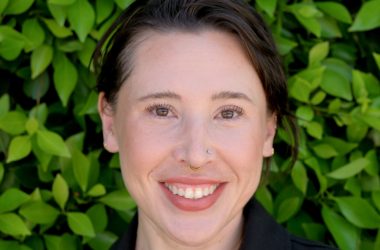
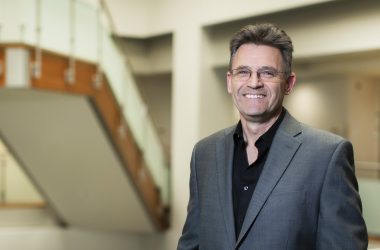
When Tanner Michaelis joined La Jolla Institute for Immunology (LJI), he was just beginning his research career. He didn’t have a Ph.D., but he did have guts. Michaelis began investigating amyotrophic lateral sclerosis (ALS), a disease with no cure and no clear cause.
Now we know: Michaelis was exactly the right scientist for the job.
To live with ALS is to live with uncertainty. Most cases progress quickly, and patients die within about 18 months. Yet there are the rare patients, such as Stephen Hawking, who survive for decades.
And what can we blame for the disease? Some ALS patients have the tell-tale genetic mutations. But many patients display no known genetic causes. Their cases are a mystery.
In 2022, Michaelis joined LJI as a lab tech in the Sette Lab. This was a pivotal time in ALS research. Michaelis’s mentor, LJI Professor Alessandro Sette, Dr.Biol.Sci., was rethinking those big ALS mysteries. Rather than seeing chaos, he saw clues.
Since we can’t blame every ALS case on genetics, Dr. Sette was studying whether inflammatory T cells might play a role in the disease. Perhaps harmful T cells were mistakenly attacking motor neurons in ALS patients, similar to how T cells damage tissues in autoimmune disease.
Michaelis’s job was to isolate different T cell subtypes (each subtype has a unique job in the body) from ALS patients. Then he would try to find out if that inflammation might be tied to the motor-neuron damage seen in ALS patients.
A critical step in the process: Michaelis would compare patients with shorter and longer survival times. Would their T cells hold any clues to their disease progression? If every ALS case was a bit different, Michaelis would focus on those differences.
Understanding patient needs
Michaelis is not easily intimidated. As an undergraduate student at Connecticut College, Michaelis interned at a neurology clinic, where some patients had degenerative brain diseases, such as Alzheimer’s and ALS. The neurologists could offer medications to treat some disease symptoms, but the patients weren’t going to recover.
“I think the thing that kind of surprised me the most was just how much of a toll neurodegenerative diseases take on individuals and their families,” says Michaelis. “You don’t really get to see what those families go through and the hard times they have.”
What patients go through

ALS is a neurodegenerative disease where patients experience a die-off of motor neurons. Without these neuronal connections, the brain can’t send signals to the rest of the body, and a person becomes weaker and weaker.
Around 5,000 Americans are diagnosed with ALS each year. About half of patients die within 14 to 18 months of being diagnosed, usually due to breathing failure.
His next job was even tougher. Michaelis qualified as an EMT in the thick of the COVID-19 pandemic. As soon as he graduated from college, he started working on the front lines of community health care, administering COVID-19 care and testing patients for the virus.
This clinical experience motivated Michaelis to move into research.
“I was really interested in the origins of diseases and wanted to know more about specific cell types and the biology behind them,” says Michaelis.
Getting started at LJI
Then came a shock. Within weeks of starting on the ALS research project in the Sette Lab, Michaelis learned his own grandfather was diagnosed with the disease.
New treatments take years, often decades, to reach patients. Michaelis knew his project wouldn’t benefit his grandfather, but he’d seen what ALS patients and their families go through. Now he was living it himself. It was time to make a difference in medical science.
“At that point, it was like all hands on deck for the ALS project,” says Michaelis.
Michaelis worked closely with staff in LJI’s Flow Cytometry Core to isolate specific immune cells from both the ALS patient cohort and a group of healthy volunteers. He and Dr. Sette soon zeroed in on two key kinds of T cells: inflammatory CD4+ T cells and special anti-inflammatory CD4+ T cells.
These two types of CD4+ T cells normally provide balance in the body. The inflammatory cells fight infections and cancers, for example, while the anti-inflammatory cells protect our healthy tissues.
Michaelis and Dr. Sette discovered that ALS patients produce high numbers of inflammatory CD4+ T cells. These harmful T cells are primed to attack a protein called C9orf72, which is expressed in neurons. This kind of “self-attack” is the defining feature of an autoimmune disease.
Of course, not all ALS patients are the same. Patients with longer predicted survival times had these harmful T cells, but they also had higher numbers of anti-inflammatory CD4+ T cells. It appeared that these CD4+ T cells could help control the harmful autoimmune responses and slow the progression of ALS.
Building a career in ALS research
Michaelis and Dr. Sette published their findings in Nature, one of the most prestigious journals in all of science. Michaelis was first author on the study, which means his name will forever be tied to the first-ever study demonstrating that ALS could be an autoimmune disease.
“I couldn’t have been happier,” says Michaelis. “I know it meant the world to my grandfather and the rest of my family.”
In January 2026, Michaelis received funding to take the next steps toward treating ALS. His work was supported by the Tullie and Rickey Families SPARK Awards for Innovations in Immunology, through the generosity of Peter and Raydene St. Clair.
This support allowed Michaelis to lead his first independent research project. He studied more samples, donated by additional ALS patients, and looked for opportunities to boost the protective anti-inflammatory CD4+ T cell responses.
Michaelis recently took another major step in his career by accepting a research position with pharmaceutical company Bristol Myers Squibb. He will continue collaborating with the Sette Lab to support its ongoing ALS research. Michaelis hopes this work will lead to life-saving vaccines that harness the immune system to control ALS progression.
“As you’re doing it day-to-day, it doesn’t necessarily feel like you’re changing the world,” says Michaelis. “But then I reflect on it, and I see true promise in creating either a vaccine or a therapy to help people with ALS.”
Photography by Jenny Siegwart